 DALON
Air Volume Flow Calculator
Calculate air volume flow rate based on pipe dimensions and fluid velocity. Enter the fluid flow rate, air duct size, and fluid density.
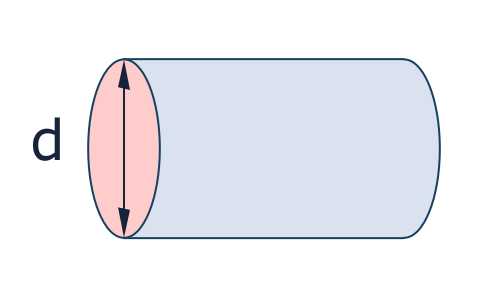
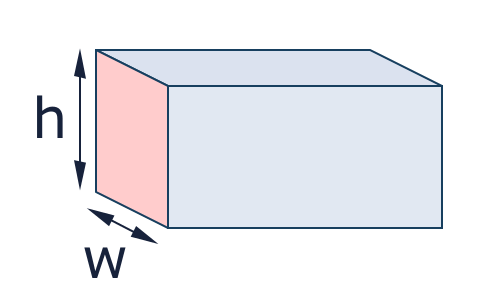
Flow Rate Formulas
- Volume Flow Rate: Q = A × v
- Mass Flow Rate: ṁ = ρ × Q
- Cross-sectional Area: Circular: A = π × (d/2)², Rectangular: A = h × w
FAQ
- What is the difference between volume flow rate and mass flow rate?
Volume flow rate measures the volume of fluid passing through a point per unit time (e.g., m³/s), while mass flow rate measures the mass of fluid passing through a point per unit time (e.g., kg/s). Mass flow rate is calculated by multiplying volume flow rate by the fluid density. - How do I calculate the cross-sectional area for different pipe shapes?
For circular pipes: A = π × (diameter/2)². For rectangular/square pipes: A = height × width. The calculator automatically handles these calculations based on your selected shape and input dimensions. - What units can I use for the calculations?
For dimensions: mm, cm, or inches. For velocity: m/s or ft/s. For density: kg/m³, g/cm³, kg/L, lb/ft³, or lb/yd³. The calculator supports various output units including CMS, CMM, CMH, LPS, LPM, LPH for volume flow, and kg/s, kg/min, kg/h, lb/s, lb/min, lb/h for mass flow. - How accurate are the flow rate calculations?
The calculator provides theoretical flow rates based on ideal conditions. For real-world applications, consider factors like pipe roughness, fittings, bends, and fluid viscosity which may affect actual flow rates. The results are suitable for initial design and estimation purposes. - What are typical velocity ranges for different applications?
Typical velocities: HVAC ducts (2-8 m/s), water supply pipes (1-3 m/s), compressed air (10-20 m/s), steam (20-40 m/s), and natural gas (5-15 m/s). These ranges help minimize noise, pressure drop, and energy consumption while ensuring adequate flow. - How do I convert between different flow rate units?
The calculator automatically handles unit conversions. Common conversions: 1 m³/s = 60 m³/min = 3600 m³/h, 1 L/s = 60 L/min = 3600 L/h, 1 ft³/s = 60 ft³/min = 3600 ft³/h. For mass flow: 1 kg/s = 60 kg/min = 3600 kg/h.